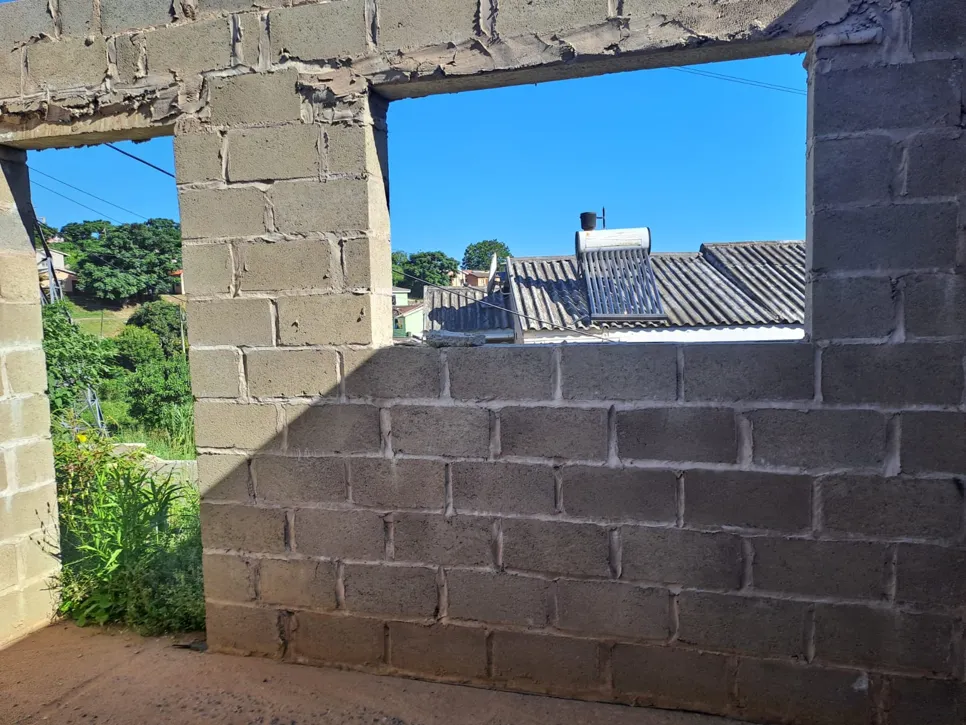
A half-finished home, a botched renovation, or a stalled building project represents one of the most stressful and financially draining experiences a homeowner can face. The scenario is distressingly common: a contractor has delivered shoddy workmanship, used incorrect materials, or, in the worst cases, taken a deposit and disappeared, leaving behind a hazardous and deteriorating site.
Compounding this difficulty is the 2025 South African construction market. The industry is forecast to shrink, driven by rising costs and a notable decline in the residential sector. This challenging economic environment can, unfortunately, increase the prevalence of contractors cutting corners, under-bidding and failing, or going bankrupt, making botched projects a more frequent reality.
For homeowners stranded in this nightmare, the path forward can seem overwhelming. However, a structured approach can move the project from a state of chaos to one of control. This report provides a comprehensive 6-phase rescue plan, navigating the practical triage of the site, the complex legal landscape, and the critical process of finding and contracting a professional to finish the job correctly.
The new Housing Consumer Protection Act of 2024 has been enacted, equipping homeowners with more legal power than ever before.
Critically, for homeowners in 2025, a powerful new set of protections is available. The new Housing Consumer Protection Act of 2024 has been enacted, finally extending critical protections to renovations, alterations, and repairs, equipping homeowners with more legal power than ever before. This guide details how to leverage these new laws in a step-by-step recovery process.
Phase 1: Triage — secure your site, stop further damage
The first priority is not to fix the original builder's mistakes, but to act as an emergency responder. This phase is about ensuring safety, stopping further financial loss, and mitigating damage.
Step 1.1: Conduct an immediate site risk assessment
Before any other action, the homeowner must conduct a thorough walk-through to identify immediate hazards. Key items for this checklist include:
- Security: Is the site unsecured? An abandoned project is an open invitation to intruders, criminal activity, or illegal occupation.
- Safety Hazards: Are there open trenches, unsupported walls, loose flooring, or protruding sharp objects? Are there exposed live wires that could pose a fire or electrocution risk?
- Hazardous Materials: Have chemicals, thinners, or other building materials been left open or in a state that poses a health risk?
- Water Ingress: Is there active pooling of water? Are structural timbers, insulation, or incomplete brickwork exposed to rain?
Step 1.2: The "stop, document, secure" rule
When active damage is occurring, there is a critical conflict: fixing the problem can destroy the evidence needed for a legal case, but ignoring it causes more costly damage. The "Stop, Document, Secure" procedure resolves this:
- Stop: Do not perform any permanent repairs or clean-ups.
- Document: Use a smartphone to take extensive photos and videos of the active hazard. This time-stamped visual evidence is non-negotiable for any future dispute.
- Secure: Only after documenting, perform the minimum temporary action required to "contain" the hazard and prevent further damage. This is not a "repair"; it is mitigation.
Step 1.3: Practical guide to emergency weatherproofing
The most common emergency action is protecting the incomplete structure from weather. Rain penetration in incomplete brickwork can lead to significant damp and structural issues. Simply laying a tarp is ineffective; it will billow, tear, and trap water.
Use a single, large, reinforced polyethylene tarpaulin. Secure the tarp by "sandwiching" the edges with lumber and fastening it through the tarp into the structure. This spreads the load and prevents tearing. If the site is abandoned and poses a clear risk to the public, the homeowner should contact their local municipality's Building Inspectorate.
Phase 2: Build your case — how to create a legally sound snag list
This phase is about transitioning from anecdotal complaints to a formal, evidence-based case. A detailed snag list is the single most powerful tool for any dispute, insurance claim, or new contractor brief.
Step 2.1: What is a "snag list" in South African law?
A snag list (also known as a "punch list") is a comprehensive inventory of all defects, flaws, or incomplete work in a construction project. This is not an informal "to-do" list; it has legal standing. Under the National Home Builders Registration Council (NHBRC) rules, a homeowner must provide a snag list to the builder within 90 days of occupation to claim for 3-month non-compliance defects. In a contractual dispute, a court will view a detailed, contemporaneous snag list as crucial evidence.
Step 2.2: How to create a "bulletproof" snag list
A legally sound snag list must be methodical. It is best created in a digital format with the following five columns:
- Item No.: A unique number for tracking.
- Location: Be specific (e.g., "Main Bedroom, south wall," not "Upstairs").
- Defect Description: Be objective and precise (e.g., "Paint blistering and peeling from wall. Visible trowel marks in plaster beneath").
- Photographic Evidence: List the filename of the corresponding photo or video.
- Required Remediation: Define the expected fix (e.g., "Hack off failed plaster to brick, re-plaster, and repaint").
Step 2.3: When to call a professional
A homeowner's snag list is good; an expert's report is a legal weapon. For a badly botched project, engaging a professional is a critical strategic investment. An expert report shifts the dispute from the homeowner's opinion versus the builder's opinion to the homeowner's expert versus the builder's opinion.
A homeowner's snag list is good; an expert's report is a legal weapon.
- Independent Building Inspector: A professional inspector will create a formal Snag/Defects Report, identifying not just cosmetic flaws but serious non-compliance with SANS 10400 regulations.
- Quantity Surveyor (QS): Essential for financial disputes. A QS can provide an objective damage assessment report and a detailed cost-to-repair estimate.
- Architect or Structural Engineer: This is non-negotiable if structural integrity is in doubt.
Alongside the snag list, the homeowner must create a complete paper trail: the original contract, all approved plans, all correspondence, and all invoices and proofs of payment.
Phase 3: Know your rights — your 2025 legal arsenal
South African homeowners have three powerful, often overlapping, avenues for recourse. The correct one depends on the type of project and the nature of the defect.
Step 3.1: The game-changer: the housing consumer protection act
This is the most important legal update for homeowners in 2025. This new Act repeals and replaces the old Housing Consumers Protection Measures Act. Its impact is revolutionary because it now covers renovations. The old Act was almost exclusively for new builds, leaving homeowners with botched renovations with little recourse. The new Act explicitly expands its scope to cover "any additions, alterations, renovations or repairs to a home," provided they require municipal plan approval.
Step 3.2: Avenue 1: the consumer protection act (CPA) - your "general" weapon
The CPA applies to the supply of goods and services, which includes building contracts. It provides an "implied warranty of quality," meaning the service and materials must be suitable for their purpose, of good quality, and free of defects. If the work fails to meet these standards within six months, the consumer has the right to demand that the builder either repair the defect, replace the item, or refund a reasonable portion of the price paid. A formal complaint must be lodged within three years.
Step 3.3: Avenue 2: the NHBRC - your "specialist" weapon
The NHBRC is the regulatory body for the home building industry. Its warranty scheme provides a critical safety net and covers a 3-month snag list, 1-year roof leaks, and 5-year major structural defects. The NHBRC has a formal complaint process that must be followed precisely for a claim to be accepted.
Step 3.4: Strategic choice: CPA vs. NHBRC?
This is not an "either/or" scenario; it is about using the right tool for the job.
- For a botched renovation: A homeowner can now use two tracks. Use the CPA's 6-month "refund" demand for a quick financial resolution, and simultaneously lodge a complaint with the NHBRC under the new 2024 Act.
- For a new build (e.g., leaking roof): If the 6-month CPA window has closed, the primary weapon is the NHBRC's 1-year roof leak warranty.
- For deposit theft: This is a criminal matter of fraud and must be reported to the SA Police Service (SAPS) Commercial Crimes Unit.
Phase 4: Define the rescue — scoping the new project
A rescue contractor cannot be hired without a "battle plan." The Snag List identified the problems; a Scope of Work (SOW) defines the solutions. A high-quality, detailed SOW is the only way to obtain accurate and comparable quotes. Without it, one builder may quote to "patch" a crack while another quotes to "re-hack and re-plaster," leading the homeowner to accept a cheaper, incorrect quote.
Step 4.1: How to write a remedial SOW
The SOW must be specific and avoid all ambiguity. For example, a bad SOW is "Fix leaking shower." A good SOW details every step: "Protect surrounding floors," "Remove all tiles and fittings," "Apply SANS-compliant waterproofing system," "Conduct 24-hour flood test," and "Retile using waterproof grout."
Step 4.2: Defining "done" — writing acceptance criteria
Separate from the SOW (the "what"), Acceptance Criteria are the "tests" to prove the work is complete and correct. They must be clear, testable, and measurable. For "Re-plaster south wall," criteria would be: "1. Wall is smooth with no trowel marks. 2. Wall is level and plumb. 3. No cracks are visible after 7-day curing period."
Phase 5: Hiring the right rescue contractor
Hiring a takeover contractor is a high-risk activity. Professionals are often wary, fearing blame for the original builder's hidden faults. A "cowboy" contractor will promise anything, whereas a true professional will be cautious and ask many questions. A detailed SOW is the best tool to attract a high-quality professional.
Step 5.1: The vetting checklist: 10 critical questions
A rigorous vetting process is essential. Key questions include: "Are you registered with the NHBRC?", "Can you provide proof of Contractor's Liability Insurance?", and "Can you provide references for remedial or 'takeover' jobs?". It is also critical to ask about their on-site supervision, what completion certificates will be issued, and how "Variation Orders" (for new problems uncovered) are managed.
Step 5.2: Finding a vetted professional
This vetting process can be overwhelming. Procurement platforms and professional networks become invaluable. Homeowners can use platforms to access a network of vetted, insured, and registered building contractors experienced in remedial work. To get accurate quotes, homeowners should upload the photos and snag list created earlier.

Phase 6: The new contract — protecting your project and your pocket
The final phase is about locking in the new project with a secure contract. A handshake deal or a vague quote is often how the original project failed. This mistake must not be repeated.
A handshake deal or a vague, one-page quote is often how the original project failed. This mistake must not be repeated.
Step 6.1: The non-negotiable formal contract
A formal, standard-form contract is mandatory. The JBCC (Joint Building Contracts Committee) suite of contracts is the South African industry standard. The SOW and Acceptance Criteria must be attached as a formal annexure to this contract.
Step 6.2: A "bulletproof" payment structure (milestones & retentions)
The payment structure is the homeowner's primary tool for quality control. No large upfront payments should be made. Instead, use milestone payments linked to the verified completion of tasks from the SOW.
Step 6.3: The "secret weapon": the retention fund
A "retention" is a percentage of the new contractor's money (typically 5% to 10%) that the homeowner withholds as security. When the builder achieves "Practical Completion," the homeowner releases half of the retention fund. The homeowner then holds the final portion for a "Defects Liability Period" (typically 90 days). The builder is contractually obligated to return and fix any new snags to get their final payment. This system gives the contractor a powerful financial incentive to deliver high-quality work and to return to service their own warranty.
From botched project to finished home
A botched construction project is a solvable problem. It can be moved from a seemingly hopeless nightmare to a manageable process by following a structured 6-phase plan: Triage, Document, Know Your Rights, Scope the Rescue, Hire a Vetted Pro, and Contract Securely.
The 2025 legal landscape, with the new HCP Act now covering renovations, provides homeowners with more robust protections than ever. Armed with a clear plan and a knowledge of these rights, homeowners can take back control, engage a qualified professional, and finally get the home they deserve.