Do you have a persistent wall crack that seems to be getting worse every time you look at it? It’s natural to feel uneasy when you spot any sign of wall damage. Not only can it look unsightly, but it also raises concerns about your home’s structural integrity. In this article, you’ll learn how to identify different types of wall cracks, their potential causes, and the steps to fix them. You’ll walk away with the knowledge to decide whether it’s a simple DIY fix or a more serious issue requiring professional attention.
Common causes of wall cracks and concrete cracks
Recognizing why wall cracks form can help you address them at their source. Below are some frequent culprits:
- Foundation settling – As the ground beneath your home shifts, you may notice foundation settling signs, like vertical wall cracks.
- Temperature fluctuations – Extreme temperature swings can cause building materials to expand and contract, leading to cracks in walls.
- Excess moisture – Water infiltration can compromise concrete walls, weakening the structure and creating a perfect environment for wall cracks.
- Structural issues – Poor construction or an ageing building may have hidden structural instability, resulting in both interior and exterior wall damage.
- Vibrations and impact – Heavy traffic, nearby construction, or even loud noises can cause micro-cracks in older or weaker walls, which may spread if not addressed.
Sometimes, a wall crack is simply cosmetic, but in other cases, it may suggest deeper structural assessment is necessary. Learning to differentiate superficial damage from serious problems can help you determine whether the crack is just a surface fault or a sign of broader building integrity concerns.

Consequences of ignoring a wall crack
Failing to act on cracks in your walls can lead to a variety of short- and long-term effects. Here’s what you might face if you delay necessary repairs:
- Worsening damage – Even small cracks can deepen and spread over time, leading to extensive concrete wall damage.
- Higher repair costs – Minor fixes today can prevent major reconstruction expenses tomorrow if the crack expands.
- Compromised structural stability – Neglected cracks weaken walls and may lead to structural instability that threatens your home’s safety.
- Property devaluation – Potential buyers worry about home settling issues and foundation settling signs, which can lower the value of your property significantly.
Ultimately, leaving wall cracks unaddressed can create headaches and costly repairs in the future. Therefore, it’s best to tackle the problem as soon as possible.
Effective solutions for wall cracks
Step-by-step DIY fixes
Some cracks—especially hairline or cosmetic ones—can be tackled on your own. Here’s how you can try repairing them:
- Gather materials: You’ll need a putty knife, a crack filler or drywall compound, sandpaper, and a paintbrush.
- Clean the area: Remove any loose debris or flaking paint around the crack. A vacuum cleaner or brush helps ensure the surface is free of dust.
- Fill the crack: Use the crack filler or drywall compound to cover the gap. Press the filler firmly into the crack to eliminate air pockets, then smooth it out with a putty knife.
- Let it dry and sand: Wait for the filler to dry completely (follow the product’s instructions) before sanding it down for a smooth finish.
- Prime and paint: Apply a suitable primer, let it dry, and then paint to match the wall’s existing colour.
While this approach can address aesthetic problems and minor imperfections, be cautious. If you suspect concrete cracks are more than superficial, consider the next options.
If you’re unsure whether your wall damage might point to deeper structural issues, don’t hesitate to get a second opinion. A professional can evaluate whether the cracks are superficial or signs of something more serious.
Semi-permanent solutions
For more substantial cracks—those wider than a few millimetres—it’s wise to reinforce the repair with patching materials such as fibreglass mesh or specialized epoxy injections. These methods can provide better structural strength when you’re dealing with larger splits in concrete walls. However, keep in mind that these somewhat bigger fixes may require advanced skills or experience, so you might feel more comfortable asking a pro for help, especially if you’re inexperienced in home repairs.
Improperly handled repairs risk trapping moisture inside structural elements or failing to provide the support your walls need over the long term. If you see any sign that the crack is spreading rapidly or if water seeps through, it’s time for a thorough structural assessment.
When to call a professional
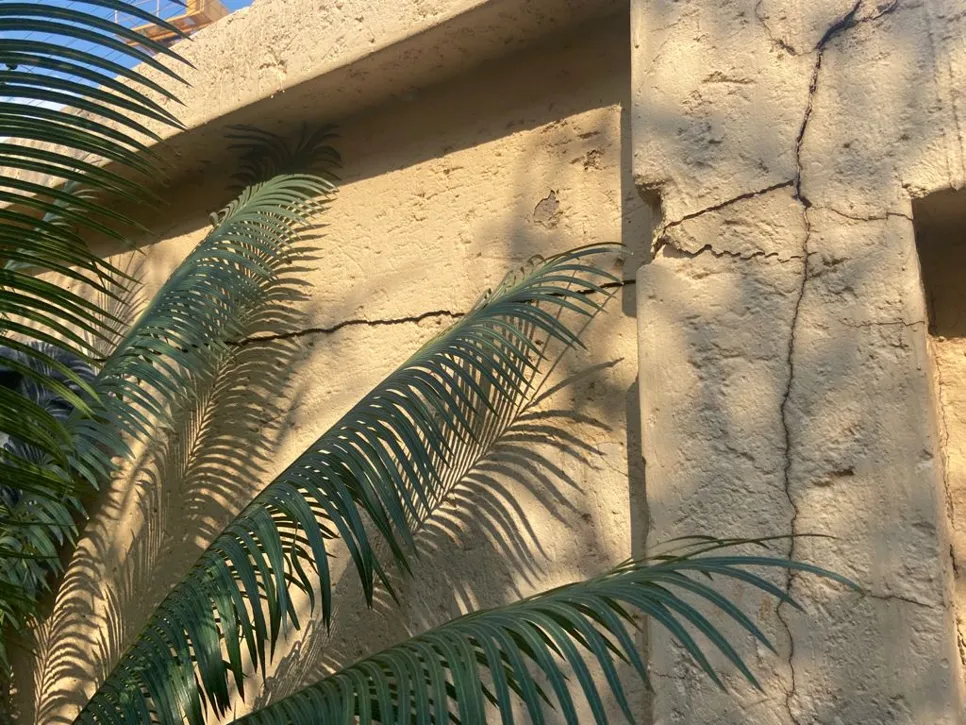
- Vertical or diagonal cracks that suddenly appear or grow quickly
- Cracks wide enough to insert a coin or pencil tip
- Any sign of bowing or bulging in the walls
- Water intrusion or damp spots around the cracks
- If a DIY repair doesn’t hold, and the crack reappears
Professionals can conduct a deeper inspection to determine if structural instability or foundation settling signs are behind those cracks. They know how to address issues like improper drainage, levelling, or reinforcement in a comprehensive manner.
Professional repair services
In advanced cases, structural repairs may require specialized methods:
- Epoxy injection – This high-strength solution is injected into a crack to bond and reinforce weakened concrete walls.
- Wall anchors or brackets – These systems can help stabilize foundation walls and prevent further shifting.
- Carbon fibre reinforcement – Carbon fibre straps are applied to areas where structural support is needed most, enhancing load-bearing capacity.
Skilled contractors have the proper tools, materials, and expertise to guarantee a lasting result. Their work is typically backed by a warranty or service guarantee, giving you confidence that your home is in good hands should issues arise later.
Tip: Always request a comprehensive evaluation and detailed quote, so you understand what’s involved and what guarantees are offered.
Find a reputable contractor when you need one by visiting Procompare.co.za. You’ll save yourself the stress of constant DIY repairs and ensure your home remains sturdy and secure.