Electric vehicle charging costs in South Africa can vary greatly depending on whether you charge at a public station or at home. This report compares the costs for three representative EV models available in South Africa. We examine the price tariffs of major public charging networks versus home electricity tariffs, and calculate the cost of a full charge, as well as estimated monthly and annual charging costs for each category.
Public EV charging costs
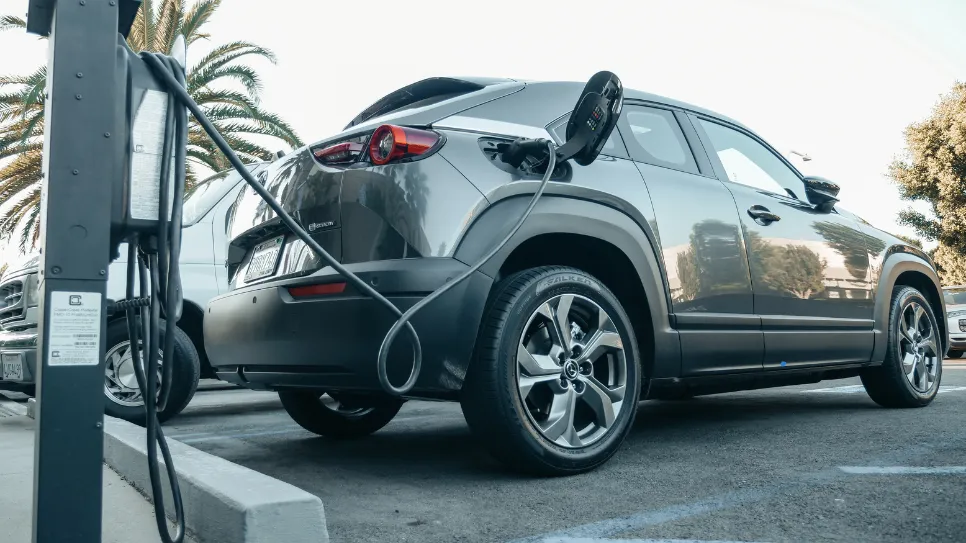
South Africa’s public EV charging infrastructure is dominated by a few key charging network operators. These include GridCars (which partners with Jaguar, BMW, Audi, and others), Chargify, and Rubicon, among a handful of smaller providers. Public chargers are available in major cities and along highways (e.g. the Jaguar Powerway along N1, N2, N3 routes), totaling roughly 400 charge points nationwide.Typical tariffs as of 2023/2024 are:
- GridCars: Around R6 per kWh on AC (slow 7–22 kW chargers), around R7 per kWh on DC fast chargers.
- Chargify: Around R6 per kWh (AC), around R7 per kWh (DC).
- Rubicon: Around R6 per kWh (AC), around R7 per kWh (DC).
- Jaguar Powerway (JLR owners): Around R3 per kWh on AC (Jaguar Land Rover subsidized rate). (Jaguar EV/PHEV drivers get about 25% discount on public charging tariffs.)
- BMW Ultra-Fast (select sites): Around R8 per kWh on high-power DC stations (e.g. 150 kW chargers).
Public charging is significantly more expensive per kWh than residential electricity.
Public DC fast charging (typically 25–150 kW) commands a premium – around R7.00–R7.50 per kWh, versus about R6 per kWh on slower AC chargers. By comparison, home electricity rates are roughly R3–R4 per kWh, meaning public charging can cost about 75%–140% more per kWh than home charging. In practical terms, this means running an EV on public power can be roughly twice as expensive as charging at home for the same distance driven.
Additional fees or policies: Most public charging in South Africa is billed purely on an energy (per kWh) basis – there are generally no separate connection fees or time-based fees for the session. You pay for the energy dispensed, similar to buying fuel per liter. However, some networks require an RFID card or app account to initiate charging (e.g. Jaguar’s network uses an RFID card for access, typically with a prepaid balance).
Idle fees (penalties for staying plugged in after your charge is complete) are not yet common in South Africa’s charging networks, but drivers are encouraged to move their vehicles once charged to free up chargers.
Home EV charging costs
Charging an EV at home in South Africa is generally the most cost-effective option. The electricity cost is simply your normal household tariff – typically in the range of R3.00 to R4.00 per kWh for residential customers. This rate applies whether you are charging an EV or running any appliance, so there’s no special premium for vehicle charging. For example, South Africa’s energy regulator (NERSA) approved significant increases in 2023–2024, so many municipal electricity rates now fall in the upper end of that range (around R3.50+ per kWh). Assuming around R3.50/kWh as a mid-point, home charging electricity is less than half the cost of public DC power.
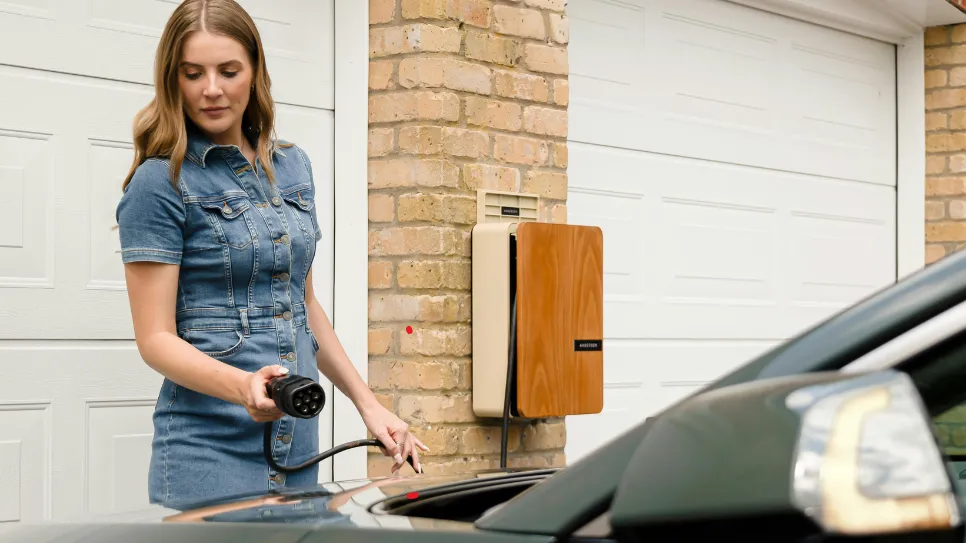
There are no direct usage fees beyond the per-kWh tariff on your electric bill – you simply plug in your car (often overnight) and pay for the energy consumed. Most EV owners install a dedicated home charging station (wallbox) for convenience, which entails a one-time cost (around R9,000–R24,000 for the unit plus R1,000–R2,500 installation). This upfront investment can be quickly offset by the savings in running costs. Home chargers typically deliver 7 kW on single-phase power (capable of fully charging overnight). Even without a special charger, a standard 3-pin outlet can charge an EV (just more slowly).
It’s worth noting that if you have a solar PV setup at home, the effective charging cost can drop further. Some EV owners charge daytime from solar for “free” (once the solar system is in place), bringing per-kWh cost down near zero. In our cost comparisons, however, we use the standard grid tariff (no solar) to represent typical households.
For this analysis, we consider three EV models representing different size categories commonly available in South Africa:
- Small EV (Hatchback/City car): Mini Cooper SE. This class has a relatively small battery (around 33 kWh) and shorter range. The Mini’s battery is around 32.6 kWh (28.9 kWh usable), and it achieves about 215 km on a full charge.
- Medium EV (Compact sedan/SUV): Mercedes-Benz EQA 250. These have mid-sized batteries around 60–75 kWh and offer much greater range. The Mercedes EQA 250 has a 66.5 kWh battery and claims around 425 km range per charge. We’ll use around 70 kWh and 450 km as a representative figure for calculations in this category.
- Large EV (Luxury SUV/Sedan): Audi e-tron 55 quattro. These vehicles carry big battery packs (around 90–100 kWh) to deliver long range and high performance. The Audi e-tron 55 features a 95 kWh battery and can drive up to around 520 km on a charge (WLTP). For our comparison, we assume roughly 90 kWh for around 450 km of range as a “large EV” benchmark.
The table below summarizes the approximate battery sizes and driving ranges for the three models:
| EV Model | Typical Battery Capacity | Driving Range per Full Charge (WLTP) |
|---|---|---|
| Mini Cooper SE | around 33 kWh | around 215 km |
| Mercedes-Benz EQA 250 | around 70 kWh | around 400–450 km |
| Audi e-tron 55 quattro | around 90 kWh | around 450–520 km |
These figures give a sense of “full charge” range for each class. In real-world driving (especially at highway speeds), actual range may be lower, but we use these nominal ranges for our cost calculations.
Cost of a full charge
Using the above battery sizes, we calculate the cost for a 100% full charge of each EV model, comparing home charging versus public charging. Home charging cost is computed using an average residential tariff around R3.50 per kWh. Public charging cost is computed using a public DC fast charger tariff around R7.35 per kWh (typical rate on GridCars/Chargify networks). In other words, we assume the driver either always charges at home or always uses public fast chargers, to illustrate the extremes. The resulting costs are:
| EV Model (Battery Size) | Full Charge Cost @ Home (R3.50/kWh) | Full Charge Cost @ Public DC (R7.35/kWh) |
|---|---|---|
| Mini Cooper SE (approx. 33 kWh) | R116 | R243 |
| Mercedes-Benz EQA (approx. 70 kWh) | R245 | R515 |
| Audi e-tron 55 (approx. 90 kWh) | R315 | R662 |
The price difference is substantial: a full recharge of a medium-sized 70 kWh EV costs over R500 in public (roughly equivalent to a tank of petrol in a family sedan), but only around R250 in electricity at home. This illustrates why “fueling” an EV at home is economically attractive.
A full recharge of a medium-sized 70 kWh EV costs over R500 in public... but only around R250 at home.
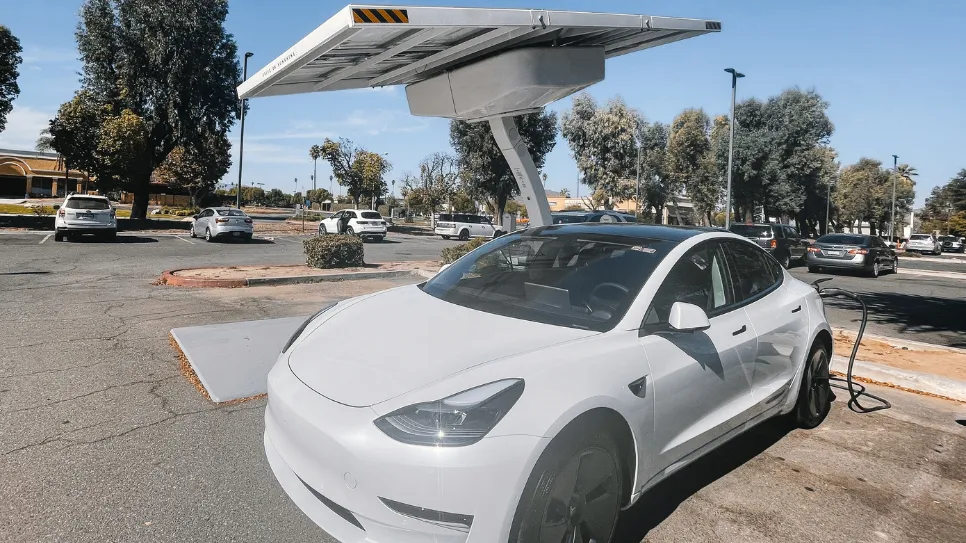
It’s important to note that public AC charging, if used instead of DC, would be a bit cheaper (around R6/kWh). For example, a 90 kWh Audi e-tron on an AC station would cost around R540 instead of R660. However, even that is still far costlier than home power. In general, public charging costs about 2 times what home charging costs for a full battery.
In general, public charging costs about 2 times what home charging costs for a full battery.
Monthly and yearly EV charging costs
What does this mean for the EV owner’s budget over time? Using South Africa’s average driving distance around 1,667 km per month (approximately 20,000 km per year), we can estimate monthly and annual charging expenses in each scenario. We assume the EV is driven this average distance exclusively on either home or public charging. The table below compares the estimated monthly and yearly charging cost for each EV model:
| EV Model (Est. Consumption) | Monthly Cost @ Home (R3.50/kWh) | Monthly Cost @ Public DC (R7.35/kWh) | Yearly Cost @ Home (R) | Yearly Cost @ Public DC (R) |
|---|---|---|---|---|
| Mini Cooper SE (approx. 15 kWh/100 km) | R880 | R1,840 | R10,500 | R22,100 |
| Mercedes-Benz EQA (approx. 16 kWh/100 km) | R910 | R1,910 | R10,900 | R22,900 |
| Audi e-tron 55 (approx. 20 kWh/100 km) | R1,170 | R2,450 | R14,000 | R29,400 |
How these were calculated: The energy consumption (kWh per km) for each model is estimated based on battery size and range (or typical efficiency for the class). Driving 1,667 km would consume a certain amount of kWh per month. Over a year, the savings of home charging are on the order of R10,000–R15,000 for these driving habits. In percentage terms, public charging can roughly double your “fuel” bill for the year compared to home charging. Put another way, the cost per kilometer for an EV on home electricity can be as low as around R0.60–R0.80, whereas on public power it might be around R1.20–R1.50 per km. This is still often cheaper per km than a petrol car (for context, at R25/L fuel and 10 km/L efficiency, petrol is R2.50 per km), but the gap is much narrower when using public chargers. Home charging maximizes the EV’s cost advantage.
Over a year, the savings of home charging are on the order of R10,000–R15,000.
Additional fees and considerations at public chargers
Beyond the per-kWh pricing, EV drivers should be aware of a few other aspects of public charging costs:
- Connection or Service Fees: As of now, major South African charging networks do not typically levy a flat connection fee for plugging in. You are charged purely based on energy consumed (kWh). This is convenient, as you don’t pay extra for longer charging sessions beyond the energy used.
- Idle Fees: Likewise, idle or overstay fees (a per-minute charge for staying parked after your charge is complete) are not widely implemented in South Africa at this time. That said, it is good etiquette to vacate a charger promptly. As public infrastructure grows and if congestion becomes an issue, operators may introduce idle fees.
- Parking Fees: If a charging station is in a paid parking lot (e.g. a mall), the driver might still owe parking fees if applicable. This is not a charging fee per se, but it can add to the total cost of a charging stop.
- Memberships/Access: Using public chargers may require an account or RFID card with the network. For example, Jaguar’s Powerway gives RFID cards to I-PACE owners, and other networks have apps. These typically don’t cost extra (no subscription fee); they are just used for user authentication and payment.
- Free Charging Opportunities: As mentioned, a number of public chargers are free to use – take advantage of these where convenient. Dealerships (BMW, Nissan, etc.), certain shopping centres, or hotels might let EV drivers charge at no cost as a courtesy.
In summary, when charging publicly, the main extra “fee” is time – fast charging costs more per kWh than slow, and you might spend time waiting during charging. Monetarily, home charging remains far cheaper in all cases. Drivers who do most of their charging at home (overnight) and only use public chargers for occasional long trips will see the greatest cost savings and lowest total cost of ownership for their EV.

The bottom line
Charging an electric car in South Africa is clearly most economical when done at home, leveraging the relatively lower residential electricity tariffs. For a Mini Cooper SE, a full charge at home might cost around R116, versus over R240 at a public DC charger. For larger EVs like the Audi e-tron, home charging saves hundreds of Rands on each full recharge (around R315 vs R660). Over the course of a year, an EV owner relying solely on public charging could spend double what a home-charging owner would spend to travel the same distance.
In a nutshell: a South African EV driver can expect roughly R3-R4 per kWh saved by charging at home rather than at public stations, translating to thousands of Rands saved annually.
Public chargers are best used as a backup or for road trips, whereas daily charging at home will keep your running costs lowest. As EV adoption grows, increased competition and scale may drive public charging prices down, but for now the “fuel” cost of an EV is cheapest from a home wall socket. By planning to charge primarily at home, EV owners in South Africa can enjoy not only the environmental benefits of electric driving but also significant cost advantages over petrol – making the switch to electric mobility financially compelling.