The hidden price tag of your digital asset
For any South African business, a professional website is no longer a luxury; it is a fundamental asset, a digital storefront, and a primary engine for growth. However, many business owners focus intensely on the initial price of designing and building this asset, often overlooking the more significant, long-term financial commitment required to keep it running effectively. The true financial picture of a website is not captured by its one-time creation cost but by its Total Cost of Ownership (TCO)—a comprehensive analysis of all expenses incurred throughout its entire lifecycle.
The true financial picture of a website is not captured by its one-time creation cost but by its Total Cost of Ownership (TCO).
A powerful analogy is to think of a website not as a static brochure, but as a commercial vehicle for your business. The initial purchase price of the van is just the beginning. To generate any value, it requires ongoing investment in fuel (hosting), regular servicing and insurance (maintenance), and a skilled driver who knows the best routes to make deliveries (content and SEO). Without these continuous operational costs, the vehicle remains parked, depreciating in value and failing to contribute to the business's bottom line.
This report separates these two distinct types of expenditure to provide clarity for strategic financial planning:
- The "Getting Started" Investment: This is the initial, one-time capital outlay to design and build the website. In South Africa, this can range from R7,000 for a basic site to over R60,000 for a more complex corporate or e-commerce platform. This is the cost to acquire the asset.
- The "Keeping It Running" Costs: This is the central focus of this analysis—the recurring, operational expenses required to maintain, secure, and grow the website over its useful life. These are the predictable, budgetable costs that determine the website's long-term viability and, ultimately, its return on investment.
This analysis will provide a clear, three-year financial forecast for a typical business website in South Africa. It will break down the ongoing costs into three core pillars: foundational technical fees, proactive maintenance, and strategic growth investments. By understanding these elements, business owners can budget with confidence, avoid unexpected financial shocks, and transform their website from a passive expense into a high-performing business asset.

The non-negotiables: your website's foundational running costs
Before a website can generate a single lead or sale, it must be live, accessible, and secure. This requires a set of foundational technical services, each with its own recurring fee. These are the non-negotiable baseline costs of owning a digital presence.
Web hosting: renting your plot on the internet
Web hosting is the service that stores a website's files (code, images, text) on a specialized computer called a server, making it accessible to users around the world via the internet. It is, in essence, the digital land on which a business builds its online property. For most small to medium-sized enterprises (SMEs) in South Africa, shared hosting is the most common and cost-effective starting point. This involves sharing server resources with other websites, which keeps costs low.
The South African market offers a wide range of shared hosting packages, with prices and features varying significantly. Entry-level plans can start for as little as R35 per month, while more robust business packages can cost R360 or more per month. The price difference typically reflects the amount of storage space, the number of websites that can be hosted on one account, the number of email accounts provided, and the overall performance capacity.
| Provider Example | Plan Tier | Indicative Monthly Cost (ZAR) |
|---|---|---|
| Truehost | Starter | R35 |
| HostAfrica | Starter | R99 |
| Xneelo | Basic | R99 |
| HostAfrica | Business | R360 |
As the table illustrates, a business can establish a solid hosting foundation for under R100 per month. However, planning for growth is crucial. A business anticipating future expansion, multiple websites, or higher traffic should budget for mid-tier plans in the R150 to R250 range to avoid performance issues down the line.

Domain name renewal: your annual digital address fee
A domain name (e.g., yourbusiness.co.za) is a website's unique address on the internet. It is a common misconception that a domain is purchased outright; in reality, it is leased or registered for a specific period, typically one year. This registration requires an annual renewal fee to maintain ownership of the address. Failing to pay this fee can result in the loss of the domain, a potentially catastrophic event for an established brand.
In South Africa, the cost of renewal depends on the domain extension. The most common choices for local businesses are:
- .co.za: This is the standard for South African businesses and is the most affordable, with average annual renewal costs ranging from R70 to R110.
- .com: The global standard, often registered alongside a .co.za domain for brand protection. Annual renewals are typically more expensive, ranging from R180 to R320.
SSL certificates: the cost of customer trust and security
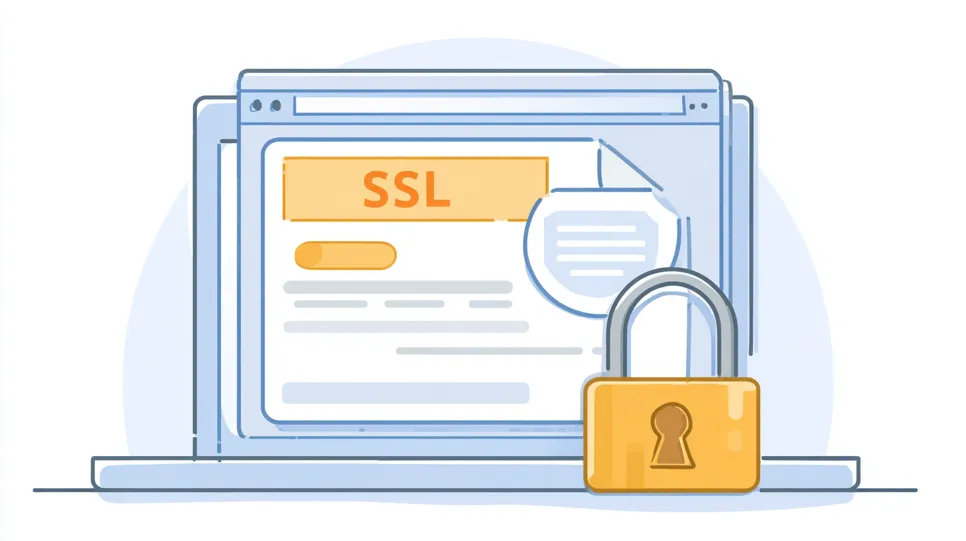
An SSL (Secure Sockets Layer) certificate is a digital certificate that encrypts the data transmitted between a user's web browser and the website's server. It is the technology behind the padlock icon and "https://" in the address bar, signaling to visitors that the connection is secure and their information is protected. In today's digital landscape, an SSL certificate is non-negotiable for building customer trust, protecting data, and achieving favourable search engine rankings.
The market for SSL certificates includes both free and paid options. Many South African hosting providers now include a free SSL certificate from Let's Encrypt with their packages. For a standard informational website, this is perfectly adequate. However, for businesses that handle sensitive information or process payments, a paid certificate offering higher levels of validation (Organization Validated or Extended Validation) is a strategic investment in trust, with costs ranging from R1,299 to over R5,000 per year.
Proactive protection: the ongoing cost of website maintenance
A website is a complex piece of software, built on a foundation of code, plugins, and themes that are constantly being updated by their developers to add features, patch security holes, and improve performance. Neglecting these updates is akin to never servicing your car; it may run for a while, but a critical failure is inevitable. Proactive website maintenance is not a reactive "fix-it" cost but a crucial, ongoing investment in the health, security, and performance of this vital business asset.
Core maintenance activities include regularly updating the website's core software (like WordPress), all installed plugins and themes, performing comprehensive security scans for malware, creating regular off-site backups of the website's files and database, and monitoring for uptime to ensure the site is always available.
In South Africa, maintenance services are typically offered as monthly retainer packages. The cost spectrum is broad, reflecting the level of service provided.
| Package Tier | Indicative Monthly Cost (ZAR) | Best For |
|---|---|---|
| Basic | R199 – R500 | Small businesses with static informational websites. |
| Business | R1,500 – R3,500 | Growing businesses that require regular content changes. |
| Premium / E-commerce | R3,800 – R8,000+ | Large businesses and e-commerce stores where uptime is critical. |
For many business owners, the decision to forgo a professional maintenance plan to save R6,000 to R12,000 annually seems like a prudent cost-cutting measure. This perspective, however, fails to account for the compounding cost of neglect. The true cost is not the modest monthly fee saved, but the unbudgeted, emergency expense of recovery after a catastrophic failure. A known vulnerability in an outdated plugin can be exploited by hackers, leading to severe consequences: loss of revenue, damage to brand reputation, and the risk of being blacklisted by Google.
A monthly maintenance fee is therefore not an optional expense; it is an essential insurance premium against a business-threatening event.
The initial "saving" of a few thousand Rand has directly led to an unbudgeted crisis costing tens of thousands. A monthly maintenance fee is therefore not an optional expense; it is an essential insurance premium against a business-threatening event.
Fuelling growth: the strategic investment in content and visibility
Once a website's technical foundation is secure and well-maintained, its ability to generate value for the business shifts entirely to its content and its visibility to potential customers. The expenses in this section are fundamentally different from the utility-like costs of hosting and maintenance. These are strategic investments designed to turn the website from a passive digital brochure into an active, lead-generating machine.

Cost of content creation
Fresh, relevant, and high-quality content—such as blog posts, case studies, and industry insights—is the lifeblood of a successful digital strategy. It demonstrates expertise, builds trust, provides substance for search engines to rank, and gives you valuable assets to share across social media and email marketing channels.
While some businesses can create content in-house, many choose to outsource to professional writers to ensure quality and consistency. In South Africa, costs for this can be structured per word (R3+), per hour (R450+), or as part of monthly agency packages ranging from R1,000 to R6,500 per month.
Cost of search engine optimisation (SEO)
Having a great website that no one can find is a wasted investment. Search Engine Optimisation (SEO) is the long-term, continuous process of improving a website's visibility in search engine results pages (SERPs) for relevant queries. Unlike paid advertising, SEO focuses on attracting organic (unpaid) traffic, which is often more sustainable and cost-effective in the long run.
Having a great website that no one can find is a wasted investment.
Monthly SEO retainers in South Africa vary based on the competitiveness of the industry and the scope of the campaign:
- Foundational/Local SEO: For businesses targeting a local geographic area, packages typically range from R2,500 to R5,000 per month.
- National/E-commerce SEO: For businesses competing on a national level, retainers are more substantial, often ranging from R7,500 to R15,000 or more per month.

Associated digital marketing costs
To maximize a website's impact, several other recurring or periodic costs should be considered in the budget:
- Professional Photography/Videography: High-quality, original visuals are crucial. A professional photoshoot can cost between R3,000 and R15,000, while video production can range from R5,000 to R50,000.
- Stock Photo Licensing: For supplementary visuals, licensing high-quality stock images can cost between R200 and R1,000 per image.
- Social Media Management: To promote content and engage customers, professional services can range from R2,000 to R5,000+ per month.
It is crucial for business owners to reframe how they evaluate these expenditures. Hosting is a cost of doing business; SEO is an investment in growth. A R7,500 monthly SEO retainer should be evaluated based on its potential ROI, not just its absolute cost compared to a utility fee.
The e-commerce engine: unpacking the higher running costs of an online store
An e-commerce website is fundamentally different from an informational one. It is not merely a digital presence; it is a 24/7, automated sales operation. This complexity introduces higher and more varied running costs across every aspect of its operation, from infrastructure and security to unique, transaction-based fees that scale directly with success.

Elevated infrastructure and maintenance
The demands placed on an e-commerce platform are far greater than those on a standard business site. A slow-loading product page or a checkout that fails under pressure leads directly to lost sales. Consequently, hosting needs to be more powerful (R150 - R300+ per month), and maintenance is more intensive, with plans often starting from R850 per month and easily exceeding R8,000 per month for large stores.
Platform and extension fees
The choice of e-commerce platform is a major determinant of ongoing costs. The two dominant models in South Africa present different cost structures:
- Shopify (Software-as-a-Service Model): This involves a predictable monthly subscription fee (from approx. R465 to R7,417/month). Additional costs arise from purchasing premium themes (one-off) and third-party apps (monthly subscriptions).
- WooCommerce (Open-Source Model): While the core plugin is free, a fully-featured store requires purchasing premium extensions for essential functions. Each extension typically carries an annual license fee (approx. R1,100 - R2,400+), and these can quickly add up.

Payment gateway fees: the variable cost of success
This is the most critical and often underestimated operational cost of running an online store. For every single transaction processed, a payment gateway charges a fee. This is a direct, variable cost that is intrinsically tied to revenue. Most gateways charge a percentage of the transaction value, sometimes combined with a small fixed fee.
| Payment Gateway | Card Transaction Fee (ex. VAT) | Cost on a R500 Sale (Card) |
|---|---|---|
| Payfast | 3.2% + R2.00 | R18.00 |
| Yoco | 2.95% (sliding scale) | R14.75 |
| Peach Payments | 2.95% + R1.50 | R16.25 |
E-commerce financial planning must be based on percentages and projections rather than fixed Rand amounts.
The financial model for an e-commerce website requires a fundamental shift in thinking away from static accounting towards dynamic forecasting. E-commerce financial planning must be based on percentages and projections (e.g., "our total website operational cost is projected to be 5% of gross revenue") rather than fixed Rand amounts. This is a crucial evolution from simple expense management to dynamic financial modelling.
Budgeting for success: a 3-year cost projection
To synthesize this information into a practical financial plan, the following tables provide illustrative three-year running cost projections for two common South African business models. These figures are based on mid-range estimates derived from market data and are intended as a budgeting guide.
Scenario A: The professional service business
This scenario assumes a 5-10 page WordPress website for a business like a consultant, small agency, or tradesperson, focused on generating leads and showcasing expertise.
| Cost Item | Annual Total (ZAR) | 3-Year Total (ZAR) |
|---|---|---|
| Web Hosting & Domain | R1,900 | R5,700 |
| Maintenance Plan | R11,400 | R34,200 |
| Content & SEO | R42,000 | R126,000 |
| Total Annual Cost | R55,300 | R165,900 |

Scenario B: The small e-commerce business
This scenario assumes a Shopify-based online store with approximately 100 products, experiencing steady growth in traffic and sales.
| Cost Item | Year 1 (ZAR) | Year 2 (ZAR) | Year 3 (ZAR) | 3-Year Total (ZAR) |
|---|---|---|---|---|
| Platform, Domain & SSL | R6,980 | R6,980 | R6,980 | R20,940 |
| Maintenance & Apps | R22,800 | R22,800 | R22,800 | R68,400 |
| Content & E-commerce SEO | R90,000 | R90,000 | R90,000 | R270,000 |
| Payment Gateway Fees* | R9,000 | R15,000 | R22,500 | R46,500 |
| Annual Total | R128,780 | R134,780 | R142,280 | R405,840 |
*Note: Payment Gateway Fees are calculated at an average of 3% of projected annual revenue, assuming revenue of R300,000 in Year 1, R500,000 in Year 2, and R750,000 in Year 3.
From expense to investment: planning your website's future
The true cost of owning a website extends far beyond the initial build. As this analysis demonstrates, the long-term operational expenses required to host, maintain, secure, and grow a digital asset constitute a significant and continuous financial commitment. For a standard service business, this can amount to over R165,000 over three years, while for a growing e-commerce store, the total cost of ownership can easily exceed R400,000.

The key findings reveal a clear distinction between two types of costs. First are the foundational, non-negotiable fees for hosting, domains, security, and technical maintenance; these are the essential costs of keeping the lights on. Second are the strategic investments in content and SEO, which are the engines of growth that generate a return. For e-commerce businesses, this model is further complicated by variable, transaction-based fees that require a dynamic approach to financial forecasting.
A properly budgeted website is not a sunk cost or a drain on resources. It is a powerful, appreciating asset that, when properly funded and strategically managed, can deliver unparalleled growth.
By understanding this complete financial picture, South African business owners can shift from a reactive to a proactive stance. A properly budgeted website is not a sunk cost or a drain on resources. It is a powerful, appreciating asset that, when properly funded and strategically managed, can deliver unparalleled growth, reach new customers, and secure a business's competitive future in the digital economy.