The R100,000 question every SA business owner asks
Every South African business owner, from a startup in Cape Town to an established enterprise in Johannesburg, grapples with a critical question when it comes to marketing: what is the return on my investment, and when will I see it? You've built a great business, your products or services are top-notch, but your website feels like a billboard in the middle of the Karoo—full of potential but seen by no one. You have heard about Search Engine Optimisation (SEO), the powerful strategy that promises to put your business in front of customers exactly when they are searching for what you offer. Yet, the one thing holding many back is the fear of pouring money into a black box with no clear timeline for results.
This article is designed to switch on the lights and demystify the process. It provides a clear, no-nonsense answer to the question, "How long does SEO really take?" More than just a number, this report offers a realistic, month-by-month roadmap specifically tailored for the South African market. It will show you exactly what to expect, the factors that can speed up or slow down your progress, and how to turn your website from a cost centre into your most valuable, 24/7 lead-generation asset.
The general industry consensus, backed by extensive data and expert experience, is that it takes between four to twelve months to see significant results from a well-executed SEO strategy. This report will break down why that timeline exists, what happens during those months, and most importantly, how you can get started on the right foot by connecting with the right experts.

The honest answer: setting realistic SEO expectations in a world of "instant" results
In a digital landscape dominated by the promise of instant gratification, SEO stands apart. It is not a quick fix or a marketing "hack." SEO is a long-term investment in a foundational business asset: your online visibility and authority. Understanding this distinction is the first step toward a successful campaign. This section establishes the fundamental timeline for SEO results and explains the "why" behind it, building a foundation of trust through transparency.
The industry consensus
Across a vast array of sources—from global SEO agencies to independent researchers and professional forums—a clear consensus emerges. A business should expect to see initial, meaningful traction within four to six months, with a significant, tangible return on investment becoming apparent between six and twelve months. For businesses in highly competitive South African sectors like finance, insurance, or national e-commerce, this timeline can extend to a year or even longer.
Any provider promising guaranteed number-one rankings in 30 days is either fundamentally misunderstanding or deliberately misrepresenting how search engines function.
The remarkable consistency of this 4-12 month forecast is not a coincidence. It is a direct reflection of the fundamental operational principles of search engines like Google. This timeline is not determined by the agency you hire, but by the mechanics of how Google itself works. This 4-12 month window serves as a critical "BS detector" for any business owner vetting a potential SEO partner.
Why SEO isn't instant - a peek behind Google's curtain
To understand the timeline, one must understand the process. Google's goal is to provide its users with the most relevant, helpful, and trustworthy results for any given query. To achieve this, it employs a complex, multi-stage process that inherently takes time.
- Crawling and Indexing: Before your website can even be considered for ranking, Google's automated programs must first discover, crawl, and index your content. This process alone can take anywhere from a few days to several weeks, especially for new websites.
- The Authority Game: Google's algorithm is fundamentally built on trust and authority. A website earns this trust over time by consistently publishing high-quality, expert content and by acquiring "votes of confidence" in the form of backlinks—links from other reputable websites.
- Competitive Dynamics: Your website is not being optimised in a vacuum. You are actively competing against other businesses, many of which have been investing in SEO for years. Overtaking these established players requires a sustained, strategic effort over a significant period.

Framing the investment: renting vs. owning your traffic
Perhaps the most powerful way for a business owner to conceptualise the SEO timeline is to compare it with its main alternative: Pay-Per-Click (PPC) advertising, such as Google Ads.
- PPC is like renting an apartment. It provides immediate traffic. As soon as your campaign is approved, your ads can appear at the top of search results. However, the moment you stop paying, the traffic stops. You build no long-term equity.
- SEO is like buying a house. It requires a significant upfront investment and consistent mortgage payments (ongoing content and link building). With each passing month, you are building valuable equity. The organic rankings you achieve become a sustainable business asset, delivering compounding returns over time.
This distinction is crucial for strategic business planning. PPC is an excellent tool for short-term goals, while SEO is the superior strategy for building long-term, sustainable, and more cost-effective growth.
The 4 key factors that determine your unique SEO timeline
The 4-12 month timeline is a reliable average, but it is not a one-size-fits-all prediction. Your business's specific journey will be influenced by four critical variables. Understanding these factors will empower you to assess where your business might fall on that spectrum and set more accurate expectations.
Factor 1: Your starting point (your website's history & health)
The condition of your digital asset at the beginning of an SEO campaign is a primary determinant of how quickly you can see results.
- Domain Age & History: An older domain with a clean, penalty-free history generally has a head start. A brand-new domain starts from a position of zero trust and authority.
- Technical Foundation: A technically sound website is like a house with good bones. If your site loads quickly, is mobile-friendly, and has a logical structure, search engines can understand it efficiently. A site plagued by technical issues has a handbrake permanently engaged.
- Existing Content & Backlink Profile: A website that already possesses a library of helpful articles and has naturally earned links has a significant advantage. A blank slate requires a much longer runway.

Factor 2: Your battlefield (the competitive landscape in South Africa)
You are not optimising in isolation. The intensity of your competition directly impacts the time and effort required to gain visibility.
- Industry Competition: Some industries are digital warzones. Attempting to rank for high-value terms like "car insurance" or "real estate in Cape Town" is a monumental task. In South Africa, sectors like finance, e-commerce, and legal services are particularly fierce. Conversely, a business in a niche market can expect to see results much faster.
- Keyword Competitiveness: A smart SEO strategy will often target specific, long-tail keywords (e.g., "commercial litigation attorney in Sandton") first to achieve quicker wins and build momentum before tackling more difficult, broad terms like "lawyer."
Factor 3: Your strategy (the quality of your game plan)
An effective SEO strategy acts as a force multiplier. It ensures that your resources are applied in the most impactful way possible. A high-quality strategy involves targeting the right keywords, creating genuinely helpful content, and integrating all three pillars of SEO—technical health, on-page optimisation, and off-page authority—into a cohesive plan.
SEO is a marathon, not a sprint. Sporadic, stop-and-start efforts will fail to build the momentum required for success.
Factor 4: Your resources (your investment & consistency)
Ultimately, the pace of your SEO progress is tied to the resources you dedicate to it.
- Budget & Manpower: SEO is not free. It requires a significant investment of time and, often, money. A larger, more consistent investment allows for a greater volume of high-quality work to be completed, which can accelerate the timeline for results.
- Consistency is Key: A consistent, ongoing commitment to publishing content, improving the website, and building authority is absolutely non-negotiable. It is this sustained effort that signals to Google that your website is a serious, long-term player worthy of high rankings.
By analysing these four factors, a business owner can move from a general timeline to a more personalized forecast. A business with a 10-year-old, technically sound website in a low-competition niche can expect results on the faster end of the spectrum, perhaps in 3-5 months. In contrast, a new startup with a brand-new website entering the hyper-competitive FinTech space in Johannesburg will likely face a 12-18 month journey to achieve significant traction.

The complete month-by-month SEO roadmap for your SA business
This section provides a detailed, phase-by-phase breakdown of a typical 12-month SEO campaign. This roadmap demystifies the process, showing a business owner exactly what work should be happening at each stage and what results can be realistically expected.
Phase 1: Foundation & discovery (months 1-3) - laying the groundwork
This initial phase is all about deep analysis, strategic planning, and building a solid foundation. While it may feel like little is happening on the surface, this is the most critical stage for long-term success.
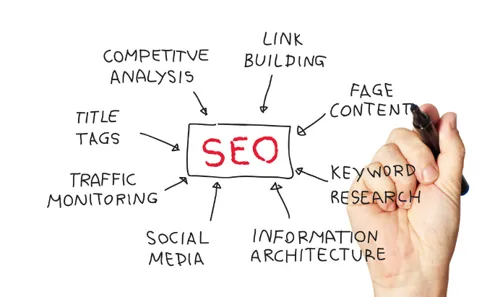
- Month 1: Audit, Research & Strategy: The campaign kicks off with a comprehensive technical SEO audit, in-depth keyword research, and a thorough competitor analysis. Essential tools like Google Analytics 4 and Google Search Console are set up. You should receive a detailed strategic plan of action.
- Month 2: Critical Fixes & On-Page Foundations: The team addresses the highest-impact technical issues and implements foundational on-page SEO across your most important pages, including optimising title tags, meta descriptions, and URL structures.
- Month 3: Initial Content Creation & Local SEO Setup: The first batch of high-quality, keyword-targeted content is written and published. For any local business, this is the critical month to create and meticulously optimise your Google Business Profile (GBP).
Phase 2: Gaining traction & authority (months 4-6) - starting the climb
This phase is about building momentum. The foundational work starts to pay off, and the first tangible signs of progress become visible.
- Month 4: Content Deployment & Link Building Kick-off: New content is published regularly, and the crucial process of strategic link building begins. This is often the month where you may see a small but noticeable uptick in organic traffic and impressions.
- Month 5: Scaling Content & Analyzing Early Data: The pace of content production increases, and early data is used to optimise pages further. Link-building efforts are intensified. The growth curves for traffic and keyword rankings should now be on a slow but steady upward trend.
- Month 6: Measuring Momentum & Seeing Early ROI: This marks a major milestone for a comprehensive review. By the end of month six, a well-executed SEO campaign should demonstrate clear, undeniable positive momentum. The business should be starting to see the first signs of a real return on investment.

Phase 3: Acceleration & growth (months 7-12) - building a moat
In this final phase, the campaign transitions from building momentum to accelerating growth and establishing a dominant position in the market.
- Months 7-9: Scaling Success & Targeting Bigger Keywords: The strategy now is to scale what works. Link-building efforts are expanded, and the campaign can begin to target more competitive, higher-volume keywords. This period should see significant, often accelerating, growth in organic traffic.
- Months 10-12: Dominating Your Niche & Driving Conversions: The focus can expand to include Conversion Rate Optimisation (CRO) to turn more visitors into customers. Older content is refreshed to maintain its rankings. By the one-year mark, organic search should be a primary, reliable, and highly profitable source of leads for the business.
The South African advantage: how to get quicker wins with local SEO
While a national or global SEO campaign is a long-term endeavor, businesses serving a specific city or region in South Africa can achieve much faster results by focusing on Local SEO. For a local plumber, dentist, or restaurant, dominating the local search results can be a game-changer, and it's often achievable in a shorter timeframe.
Your digital "shisa nyama": mastering your Google business profile (GBP)
Your Google Business Profile is the single most powerful and important tool in your local SEO arsenal. It is your digital storefront, often the first interaction a potential customer has with your business. A fully optimised profile can appear in the coveted "Map Pack" at the top of local search results.
Your Google Business Profile is the single most powerful and important tool in your local SEO arsenal.
Your checklist for GBP mastery should include: completing every section, using correct categories, uploading high-quality photos, encouraging and responding to all reviews, and ensuring 100% NAP (Name, Address, Phone number) consistency across all platforms.

Building local trust: the power of SA directories and citations
A "citation" is any online mention of your business's Name, Address, and Phone number (NAP). Consistent citations across reputable online directories are a key local ranking factor. They act as third-party verification for Google, confirming that your business is legitimate and located where you claim to be.
Here is a curated list of authoritative and relevant directories for the South African market to provide a clear starting point for building crucial local signals.
| Directory Name | Website | Notes |
|---|---|---|
| Google Business Profile | google.com/business | Essential. The most critical listing for local visibility. |
| Brabys | brabys.com | A long-standing, trusted South African business directory. |
| Yellow Pages SA | yellowpages.co.za | High authority and one of the most well-known brands in SA. |
| Ananzi | ananzi.co.za | One of South Africa's oldest web portals. |
| Hotfrog SA | hotfrog.co.za | A popular directory for small and medium enterprises. |

Earning local links: getting mentions from reputable .co.za websites
Just as with national SEO, backlinks are critical for local success. However, for local SEO, links from other South African websites (especially those with a .co.za domain) carry extra weight as they send a strong geographic relevance signal to Google. Actionable ideas for earning these valuable local links include partnering with complementary local businesses, sponsoring community events, getting featured in local news media, or joining your local Chamber of Commerce.
Speaking the lingo: creating content that resonates with South Africans
Finally, your website content must speak directly to your local audience. This goes beyond just mentioning your city. It involves using local terminology and cultural references that build an instant connection. Use "bakkie" instead of "pickup truck," "geyser" instead of "water heater," and "robot" instead of "traffic light." Reference local landmarks and suburbs. This demonstrates that you are not just in the community, but of the community, building a level of trust that generic content can never achieve.
The smartest first step: finding the right SEO partner in South Africa
The comprehensive roadmap laid out makes one thing abundantly clear: successful SEO is a complex process that requires deep expertise, strategic planning, and consistent execution. The success of this entire journey hinges on the skill and reliability of the professionals who implement it.

What to look for in a South African SEO agency
Choosing an SEO partner is a significant business decision. The right agency can be a catalyst for transformative growth, while the wrong one can lead to wasted time and budget. Key criteria for evaluation include a proven track record with case studies from the SA market, transparency in reporting, and deep local market expertise.
The red flags: how to spot unreliable providers
Just as important as knowing what to look for is knowing what to avoid. Be wary of several red flags: guarantees of "#1 rankings," vague "secret sauce" strategies, unrealistically low prices, and a lack of clear communication. Effective SEO requires significant time and expertise, and rock-bottom prices often mean ineffective or even harmful techniques that could get your site penalised by Google.
A reputable agency should be able to provide concrete evidence of their success with real, measurable results.
The solution: a smarter, faster way to get expert help
The process of sourcing a reliable service provider is itself a time-consuming and often frustrating task. This is precisely the problem that a platform connecting business owners with pre-vetted, qualified professionals is designed to solve. It acts as a strategic bridge, removing the friction and risk from the hiring process.
The value proposition for a busy South African business owner is clear: save time, get competitive quotes, and hire with confidence. Instead of spending weeks searching, you submit one request and the right professionals come to you. You can receive multiple quotes, ensuring fair pricing, and read detailed reviews from other business owners, reducing the risk of hiring an incompetent provider.
Your next step: from roadmap to reality
You now have the complete roadmap. You understand the realistic timeline for SEO, the critical factors that will shape your journey, the month-by-month process, and the specific tactics required to win in the South African market. You possess a level of clarity on SEO that surpasses 99% of your competitors.

The only thing left is to translate this knowledge into action. The initial investment in SEO is significant, but the long-term payoff in sustainable, profitable growth is undeniable. The most effective, risk-free, and efficient way to begin this journey is by connecting with the right experts who can bring this roadmap to life for your business.
Stop guessing and start growing. The final step is to find your perfect SEO partner who can navigate the complexities and deliver the results your business deserves.
Ready to turn your website into a 24/7 lead machine? Find your perfect SEO partner in minutes.