Your journey to energy independence starts on your roof
For many South African homeowners, the daily reality of load shedding, coupled with the relentless rise in electricity tariffs, has transformed the desire for a stable power supply from a luxury into a necessity. The promise of solar power—clean, reliable energy generated right on the rooftop—offers a powerful solution, a path toward energy independence and peace of mind.
However, embarking on the solar journey can feel daunting. Before a single panel is purchased, a crucial first step must be taken: assessing a home's "solar readiness." This is the process of understanding a property's unique potential and limitations, ensuring that the significant investment in a solar system is built on a solid foundation. This guide serves as a comprehensive pre-consultation checklist, designed to empower homeowners with the knowledge to navigate this process confidently.
The assessment of solar readiness can be understood through three core pillars:
- The Foundation: A thorough evaluation of the roof—the physical platform for a home's future power plant.
- The Fuel: A clear understanding of the property's access to sunlight, the free and abundant energy source.
- The Blueprint: A practical navigation of the essential rules, regulations, and technical standards that ensure a safe, legal, and effective installation.
By working through these pillars, a homeowner can transform from a passive observer into an informed, proactive decision-maker, fully prepared to engage with solar professionals and make the best choice for their energy future.
A deep dive into your roof's solar potential
The most fundamental question is whether the roof is physically suitable to host a power generation system for its entire 25- to 30-year lifespan. A solar installation is a long-term structural commitment. The roof must be viewed as a 30-year asset, a reliable partner to the solar panels it supports.
The process of removing panels to replace a failing roof is exceptionally costly and complex.
The process of removing panels to replace a failing roof is exceptionally costly and complex, making it critical to get the foundation right from the very beginning. This perspective reframes a potential roof renovation not as a separate expense, but as a strategic and integral part of the solar investment itself.
Can your roof handle the load?
A solar installation adds both a static "dead load" from the weight of the equipment and a dynamic "live load" from environmental forces like wind. The combined weight typically adds between 18 and 24 kg per square metre to the roof. While most modern roofs can handle this, it is not an assumption that can be left to chance.
This assessment is not a do-it-yourself task. South African National Standards (SANS 10400-A) legally mandate that a registered civil or structural engineer must certify any structural alterations, which includes installing solar panels. This is a non-negotiable requirement for safety, municipal compliance, and insurance validity. The engineer's assessment will verify the roof's capacity to handle the dead load, live load, and powerful wind uplift forces.
While awaiting a professional, homeowners can conduct a preliminary visual check for obvious red flags. Signs like a visibly sagging roofline, cracked timber in the trusses, or water stains on the ceiling can indicate underlying structural weaknesses that must be addressed.

Is your roof in good condition?
Solar panels are a long-term investment, with a productive lifespan of 30 years or more. The roof that supports them must be a durable partner for this entire period. Installing a high-tech power system on an old, deteriorating roof is a recipe for future complications.
A widely accepted industry guideline is that if a roof covering is approaching 25 years of age, it should be seriously considered for replacement.
A widely accepted industry guideline is that if a roof covering is approaching 25 years of age, it should be seriously considered for replacement before the solar installation proceeds. The logic is simple: the cost and disruption of removing a solar array to replace the roof are far greater than ensuring the roof is in excellent condition from the outset. Combining a roof replacement with a solar installation creates a single, powerful home upgrade that provides decades of security and increases property value.
What is your roof made of?
While solar technology can be adapted to most roof types, the material of the roof covering has a major impact on the installation's complexity and cost. Understanding the characteristics of a home's roofing material is essential.
| Roof Material | Installation Ease | Key Considerations & Mounting Method | Solar-Ready Rating |
|---|---|---|---|
| Metal (IBR/Corrugated) | Excellent | Lightweight, strong, and ideal. Installation typically uses non-penetrating clamps that attach to the raised ribs, preserving waterproofing integrity. | ★★★★★ |
| Concrete/Clay Tiles | Good | Extremely common and compatible. Specialized hooks are used that slide under a tile and bolt to the roof truss, avoiding drilling that could cause cracks. | ★★★★☆ |
| Fibre Cement | Good | Durable and non-combustible. Installation methods are similar to tile or metal and require careful handling to prevent cracking. | ★★★☆☆ |
| Slate | Challenging | Very fragile and expensive to repair. Requires highly experienced contractors who use specialized mounting hardware to avoid breakage. | ★★☆☆☆ |
| Thatch | Extremely Challenging | Significant fire risk. Installation is highly specialized, requiring expert engineering for weight distribution, ventilation, and strict fire safety compliance. | ★☆☆☆☆ |
| Asbestos | Unsuitable | Installation is illegal due to severe health risks. The roof must be professionally removed and replaced by a certified contractor. | ☆☆☆☆☆ |
Do you have enough space?

Maximising your sunshine harvest
The amount of energy a solar system can produce is directly related to the available roof space. A reliable rule of thumb is that approximately 6 to 7 square metres of clear, unobstructed roof area is needed for every 1 kilowatt-peak (kWp) of solar panel capacity.
An average household might require a 4–5 kWp system, needing about 25–35 m² of suitable roof space. A larger home with a heat pump or electric vehicle might need a 10 kWp system, requiring at least 60–70 m².
Flat roofs have a special consideration. To prevent panels from casting shadows on each other, they require significant spacing. As a result, a flat roof needs approximately twice the total surface area to accommodate the same power output as a pitched roof.
Once the physical foundation has been assessed, the focus shifts to the energy source: the sun. Ensuring the home is positioned to capture the maximum amount of usable energy is paramount to the system's performance.
A system designed with an East-West split may generate more energy during crucial high-demand periods.
A sophisticated approach considers not just the total energy generated, but when it is generated. While a north-facing array produces the most kilowatt-hours overall, many households have consumption patterns that peak in the morning and late afternoon. A system with an East-West split may produce more energy during these crucial periods, increasing "self-consumption" and improving economic efficiency.
Finding your "true north"
The direction (orientation) and tilt (angle) of solar panels are the two most critical factors. In the Southern Hemisphere, the ideal orientations are clear:
- Optimal: North. Provides maximum exposure to direct sunlight.
- Excellent Alternative: East-West. Aligns energy production with morning and afternoon usage.
- Acceptable: Southeast and Southwest. Viable but with a noticeable reduction in production.
- Unsuitable: South. Receives very little direct sunlight.
The ideal tilt angle is approximately equal to the property's latitude, generally between 25 and 35 degrees. A roof pitch anywhere between 20 and 45 degrees is still highly effective.
The shadow problem
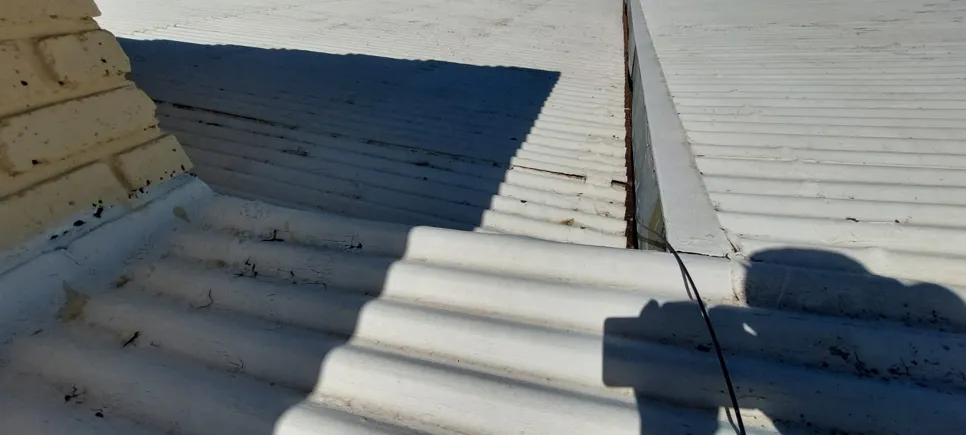
Even minor shading can have a disproportionately large and negative impact on a solar system's output. This is due to the "domino effect" within a string of panels. If one panel's performance drops, it can drag down the performance of the entire string.
If just one cell on a panel is completely shaded, the power output of that entire panel can plummet by 50%.
Homeowners should conduct their own "sun audit" by observing their roof at different times of the day. Common sources of shading include chimneys, vents, trees, and adjacent buildings. Modern technology offers solutions like power optimizers and microinverters to mitigate these effects. While these add to the cost, they can make solar viable on roofs that would otherwise be unsuitable.
Navigating South Africa's solar rules and regulations
Installing a solar system is an electrical engineering project that must comply with a robust framework of national standards and municipal by-laws. This regulatory landscape exists for critical reasons: to ensure safety, property integrity, utility worker protection, and grid stability.
The various regulations form an interconnected "compliance ecosystem" designed to create a chain of professional accountability. This system means that the single most important decision a homeowner makes is not which brand of panel to buy, but which accredited and reputable installer to hire. A professional installer is the key that unlocks this entire compliance process.
You MUST register your system
The legal requirement in South Africa is unambiguous: all solar photovoltaic (PV) systems must be registered with the relevant electricity supply authority, either the local municipality or Eskom. A common and dangerous misconception is that "off-grid" systems are exempt; this is incorrect. Off-grid systems must also be registered, primarily for safety reasons.
All existing solar systems must be registered by March 2026.
All existing solar systems must be registered by March 2026. Homeowners who fail to comply face a potential fine of R6,052 and, in some cases, the risk of being disconnected from the municipal grid entirely.

Your compliance toolkit: understanding the paperwork
Navigating the paperwork is a core part of the installation process. A professional installer will manage this, but understanding the key components is essential.
| Compliance Step | What It Is | Who Provides It? | Key Standard/Rule |
|---|---|---|---|
| Professional Installation | Work performed by a qualified company to ensure adherence to quality and safety standards. | An installer accredited by an industry body like SAPVIA. | Industry Best Practice |
| Structural Sign-Off | A formal certificate confirming the roof can safely support the solar installation. | A Registered Civil or Structural Engineer. | SANS 10400 |
| Electrical CoC | A mandatory legal document verifying all electrical work is safe and compliant. | A Registered Installation Electrician. | SANS 10142-1 |
| Municipal Authorisation | Formal written permission to install and connect the solar system, granted before installation begins. | The homeowner's Local Municipality or Eskom. | Municipal By-Laws & NRS 097 |
Your home's electrical heart: the distribution board
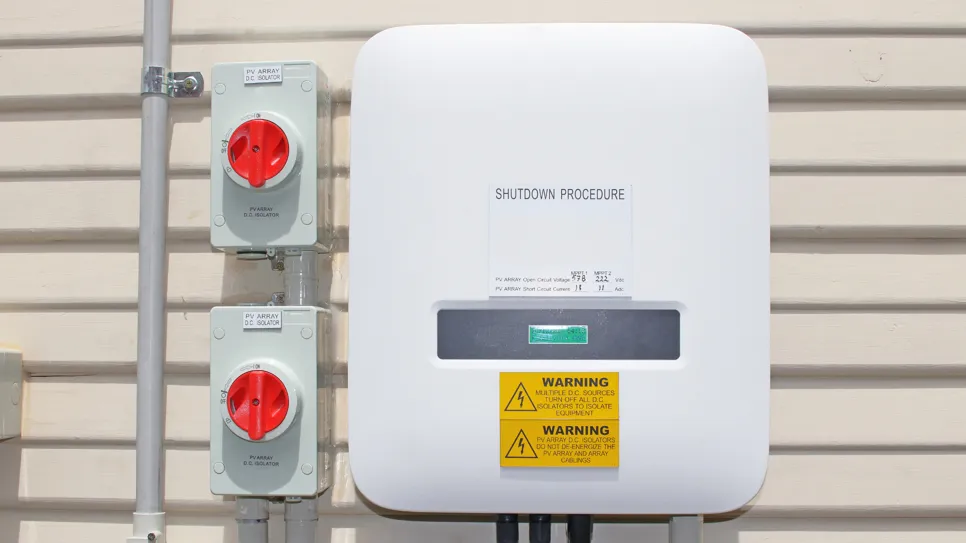
The solar system is integrated into the home's electrical network at the Distribution Board (DB board). As part of the installation, the installer has a legal obligation to ensure the DB board is fully compliant with SANS 10142-1.
This involves checks and potential upgrades, such as ensuring effective earth leakage protection, correctly rated circuit breakers, and clear labeling. The installer will add new circuit breakers for the solar components and place clear warning labels indicating the presence of a PV installation. A qualified electrician will handle all these requirements as a standard part of the work covered by the Certificate of Compliance.
Take the next step towards your sun-powered future
The journey to solar energy begins with a solid understanding of a home's readiness. A solar-ready property has a strong, healthy roof with ample, unshaded space facing a favourable direction, and an owner committed to a safe, compliant installation.
This guide has provided the foundational knowledge to assess these factors. Armed with this information, a homeowner is no longer just a potential customer but an educated partner in the design process, ready to ask the right questions.
Now, the single most important step is to choose the right professional partner. A solar installation is a significant investment, and its success hinges entirely on the expertise and integrity of the installation team. It is strongly recommended to compare detailed, itemised quotes from several accredited, reputable solar installation companies. This due diligence ensures the final system is safe, compliant, and perfectly tailored to the home for decades to come.