The starting point: understanding your home's energy appetite
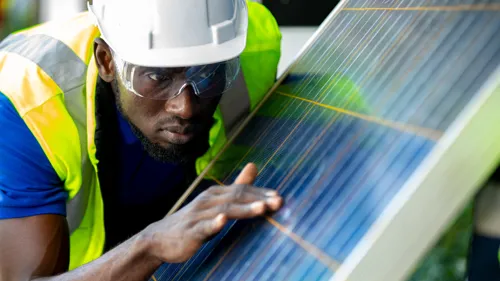
The journey towards energy independence begins not on the roof with solar panels, but at the desk with an electricity bill. Correctly sizing a solar power system is a data-driven process, and the most critical data point is a clear understanding of a household's unique energy consumption profile. Before any discussion of panels, batteries, or inverters can take place, one must first quantify the demand that the system will be designed to meet. This foundational section establishes the core concepts of power and energy, providing a step-by-step methodology for homeowners to accurately measure their electricity usage.
1.1 Kilowatts (kW) vs. kilowatt-hours (kWh): a simple explanation for power and energy
In the language of electricity, the terms 'kilowatt' and 'kilowatt-hour' are fundamental, yet often used incorrectly. A precise understanding of their distinct meanings is non-negotiable for any homeowner looking to invest in a solar power system.
A kilowatt (kW) is a unit of power. It measures the rate at which electricity is being used at a single moment. An effective analogy is the speed of a car. A high-power appliance, like a 2 kW kettle, consumes electricity at a very fast rate. The total number of appliances running simultaneously determines the home's instantaneous power demand, which is directly relevant to sizing the system's inverter.
A kilowatt-hour (kWh), conversely, is a unit of energy. It measures the total amount of electricity consumed over a period of time. If power (kW) is speed, then energy (kWh) is the total distance travelled. Electricity utilities like Eskom bill households based on the total kilowatt-hours consumed. This figure is the most important factor for determining the size of the solar panel array and the battery storage system.
1.2 Your Eskom or municipal bill: the key to unlocking your energy profile
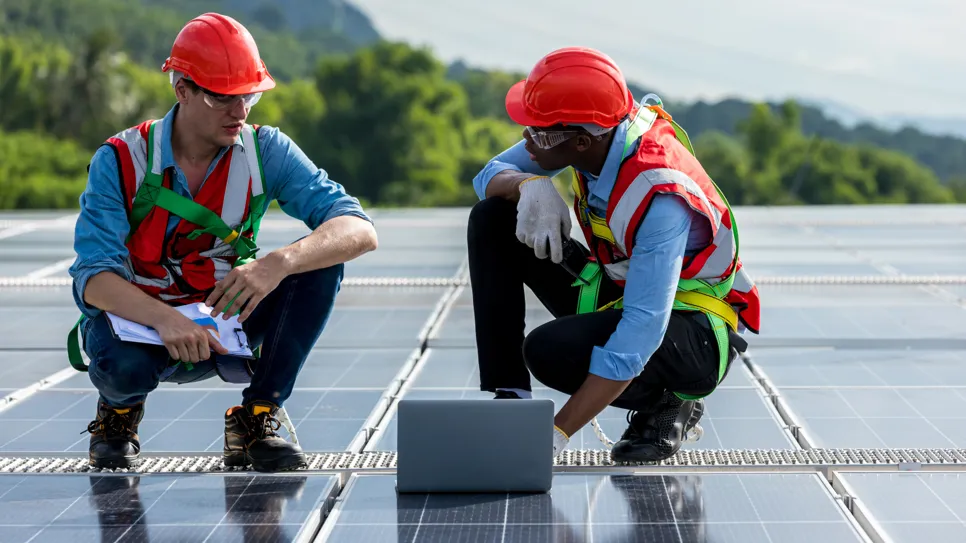
The most reliable source of historical energy consumption data is the monthly electricity bill. This document is a detailed record of a household's energy appetite. For homeowners on a post-paid system, the bill will explicitly state the total number of kWh consumed.
For those using prepaid electricity meters, the process requires tracking the purchase of prepaid electricity vouchers over time. To build an accurate profile, it is essential to collect and sum the kWh units purchased over several months, ideally a full year.
Before investing in a solar system to generate power, it is often more cost-effective to first reduce the underlying demand.
Scrutinising these documents reveals not just the total consumption but also the financial cost and seasonal patterns. A high kWh figure often prompts an investigation into energy-inefficient appliances, such as old geysers or pool pumps. Implementing energy-efficiency measures—such as installing a solar geyser or improving insulation—can significantly lower a home's baseline energy consumption. This, in turn, reduces the required size of the solar PV system, leading to substantial capital savings.
1.3 A step-by-step guide to calculating your average daily kWh consumption
With the source of data identified, the next step is to process this information into a single, actionable metric: the average daily energy consumption. This figure represents the daily energy "target" that the solar system must be designed to generate. A precise calculation requires accounting for seasonal fluctuations.
The following step-by-step process ensures a reliable calculation:
- Gather Historical Data: Collect a minimum of 12 consecutive months of electricity bills or prepaid purchase records. A full year of data is crucial to capture seasonal peaks and troughs.
- Calculate Total Annual Consumption: Sum the total kWh consumed from all 12 bills.
- Determine Average Monthly Consumption: Divide the total annual kWh consumption by 12. In South Africa, a middle-class household of four often uses around 900 kWh per month.
- Calculate Average Daily Consumption: Divide the average monthly consumption by 30. This final number is the foundational metric for sizing the solar system. For example, a household with an average monthly consumption of 900 kWh would have an average daily consumption of 30 kWh/day.
Sizing your solar engine: from energy needs to panel array (kWp)
Once the daily energy consumption target (in kWh) has been established, the next phase is to translate this energy requirement into a physical solar array. This involves determining the total generating capacity of the solar panels needed, measured in kilowatt-peak (kWp).
2.1 Harnessing the sun: peak sun hours and South Africa's solar potential
The amount of energy a solar panel can produce is directly proportional to the amount of solar irradiance it receives. To standardize this, engineers use the concept of "Peak Sun Hours" (PSH). This metric refers to the number of hours per day during which solar irradiance intensity is equivalent to 1,000 watts per square meter.
South Africa is exceptionally well-suited for solar energy, boasting between 4.3 and 6.5 peak sun hours per day on average. A location with more peak sun hours will require a smaller, less expensive solar array to generate the same amount of energy.

2.2 The core sizing formula: calculating your ideal array size
With the daily energy target (kWh) and the location's peak sun hours (PSH) known, the theoretical size of the solar array can be calculated using a straightforward formula: Required Array Size (kWp) = Average Daily Energy Consumption (kWh) / Peak Sun Hours (PSH).
For instance, a household that consumes 30 kWh per day in Johannesburg (approx. 5 PSH) would theoretically require a 6 kWp solar array (30 kWh / 5 hours = 6 kWp). However, this is only a starting point, as real-world conditions are never perfect.
2.3 The impact of reality: how roof orientation, tilt, and shading affect performance
The theoretical output of a solar array is significantly influenced by its physical installation. In the Southern Hemisphere, the optimal orientation for a solar array is true north. The ideal tilt angle is often close to the location's latitude. Shading from trees, chimneys, or adjacent buildings can drastically reduce energy output and must be carefully analyzed.
2.4 Accounting for losses: a realistic look at system inefficiency
No energy system operates at 100% efficiency. Solar PV systems are subject to numerous small losses, including thermal losses as panels heat up, inverter losses, shading losses, and losses from dirt and dust. Cumulatively, these factors can result in a total net loss of around 23% of the system's theoretical potential.
To compensate for these inevitable losses, a common industry practice is to oversize the array by a factor of 1.20 to 1.25.
To compensate, the theoretical array size must be adjusted upwards. The formula for a more realistic array size is: Realistic Array Size (kWp) = Theoretical Array Size (kWp) × 1.25. Applying this to the example: 6 kWp × 1.25 = 7.5 kWp.
2.5 From kilowatts to panels: estimating your required roof space
The final step is to translate the required capacity in kWp into a tangible number of solar panels. In the South African residential market, modern panels typically have a power rating from 350 W to 550 W. Using 550 W panels for a 7.5 kWp array would require 14 panels (7,500 W / 550 W ≈ 13.6, rounded up). A typical panel is about 2m x 1m, meaning this array would need roughly 28 square meters of unobstructed, north-facing roof space.
It is at this stage that the calculation moves into financial optimization. The point of maximum financial return on investment may not coincide with the point of maximum energy offset. Deliberately sizing a system for a partial offset (e.g., 80% or 90%) might offer a quicker payback period.
Building for resilience: sizing your inverter and battery for load shedding
In the unique South African energy landscape, sizing a solar system is a dual-purpose exercise. It must not only generate enough energy to reduce electricity costs but also ensure energy security during load shedding. This requires careful sizing of the inverter and the battery based on a different set of criteria.
3.1 Beyond cost savings: why a battery is essential in the age of load shedding
A standard grid-tied solar system without a battery will not provide power during load shedding. For safety reasons, grid-tied inverters shut down automatically when they detect a grid failure. Therefore, to achieve true energy independence during outages, a battery storage system is not an optional add-on but an essential, core component of any residential solar installation in South Africa.
3.2 The "essential loads" audit: deciding what must stay on when the grid goes off
The size of the battery and inverter are determined not by the home's total energy consumption, but by the specific appliances the homeowner wishes to power during a load shedding event. This necessitates an "essential loads audit," categorizing all household appliances based on their necessity during a power cut.
- Essential Loads: Critical appliances required for basic comfort, communication, and security (e.g., Wi-Fi routers, security systems, essential lighting, refrigerators).
- Non-Essential / High-Demand Loads: Appliances that are either luxuries during an outage or consume an exceptionally large amount of power (e.g., geysers, electric stoves, air conditioners, pool pumps).
| Appliance | Typical Power Consumption (Watts) | Load Shedding Classification |
|---|---|---|
| Wi-Fi Router & Fibre ONT | 10 - 20 W | Essential |
| LED Lights (per bulb) | 5 - 15 W | Essential |
| Television (modern LED/LCD) | 50 - 200 W | Essential |
| Fridge / Freezer (running) | 100 - 300 W | Essential |
| Geyser (Hot Water Cylinder) | 3,000 - 4,000 W | High-Demand |
| Electric Stove / Oven | 1,000 - 2,500 W | High-Demand |
| Kettle | 1,800 - 2,200 W | High-Demand |
3.3 Sizing your inverter (kW): a dual calculation for peak demand
The solar inverter's sizing must satisfy two criteria simultaneously: its capacity relative to the solar array and its ability to supply the peak power demanded by all essential loads. It is standard practice to "oversize" the solar array relative to the inverter (a DC-to-AC ratio of 1.15 to 1.25 is common) to maximize energy harvest.
The inverter must also be able to handle the "surge" or "inrush" current of motor-driven appliances like refrigerators.
The inverter must also be able to handle the "surge" or "inrush" current of motor-driven appliances like refrigerators, which can be three to seven times their normal running wattage. The final inverter size must be the larger of the two values derived from these separate calculations.

3.4 Sizing your battery (kWh): ensuring you have enough energy to outlast the outage
While the inverter is sized for power (kW), the battery is sized for energy (kWh). The goal is to ensure the battery has enough stored energy to power the essential loads for the entire duration of a load shedding period. The calculation involves summing the running wattage of all essential appliances, multiplying by the desired backup duration (e.g., 4 hours), and then accounting for the battery's Depth of Discharge (DoD). Modern Lithium Iron Phosphate (LiFePO4) batteries are recommended, with a typical DoD of 80% to 95%.
| Parameter | Value / Calculation | Explanation |
|---|---|---|
| Average Daily Consumption | 30 kWh | From electricity bill analysis. |
| Realistic Array Size | 7.5 kWp | Theoretical size adjusted for real-world losses. |
| Number of Panels Required (550W) | 14 panels | Array size rounded up. |
| Final Inverter Size | 5 kW or 8 kW | Sufficient for peak load and pairs well with the array. |
| Final Battery Choice (LiFePO4) | 5 kWh | The next standard size up from the calculated 2.4 kWh requirement. |
The financial equation: costs, savings, and selling power in South Africa
A solar installation is a significant capital investment, and its value is determined by an interplay of upfront costs, long-term savings, and the evolving regulatory and tariff landscape in South Africa.
4.1 Investment and payback: a 2025 look at solar system costs and returns
Investing in a comprehensive solar power system with battery backup represents a substantial financial commitment. In South Africa, the cost for a complete residential installation can range from R120,000 to R350,000 or more. The return on this investment is primarily driven by savings on electricity bills, as the cost of grid electricity has seen dramatic increases.
However, the payback period is a long-term calculation, with estimates suggesting between 11 and 14 years. As grid tariffs continue to escalate, the value of each self-generated kWh increases, accelerating the payback period. This calculation also doesn't place a monetary value on the significant benefits of energy security during load shedding.
4.2 Selling your surplus: navigating feed-in tariffs
A properly sized solar system will often generate more electricity than the house consumes during peak sunlight hours. This surplus energy can be exported to the municipal grid, with homeowners compensated via a feed-in tariff. However, the implementation of these schemes varies dramatically across South Africa.
Net Billing vs. Net Metering: It is important to distinguish between the two models. Net Metering provides a one-for-one credit for exported energy. Net Billing, the model adopted in South Africa, is different: homeowners are billed for all imported energy at the full retail tariff, while exported energy is purchased by the utility at a separate, lower rate.
Case Study: The City of Cape Town's Established Program: The City of Cape Town has a well-established feed-in tariff program. Homeowners must register their system and have a bi-directional meter installed. If the value of the exported energy credit exceeds the total municipal bill, the City offers the potential for a cash payout.
Status Update: Johannesburg's Delayed Ambitions: In contrast, the City of Johannesburg's utility, City Power, announced plans for a feed-in tariff in mid-2023, but as of early 2025, the program has not yet been implemented. The delay highlights the fragmented and municipality-dependent nature of feed-in schemes in South Africa.
| Feature | City of Cape Town | City of Johannesburg |
|---|---|---|
| Status | Operational and established | Not yet implemented; delayed |
| Feed-In Rate (c/kWh) | Flat rate (approx. 87c/kWh) + incentive | Proposed Time-of-Use rates |
| Payout Mechanism | Credit against bill, with potential for cash payouts | To be confirmed; likely credit only |
4.3 The shifting landscape: how solar protects you from Eskom's new tariff structures
A pivotal development strengthening the case for solar is Eskom's restructuring of residential electricity tariffs. The key changes are the progressive removal of the Inclining Block Tariff (IBT) system and the introduction of significantly higher fixed monthly charges. The new structure disproportionately penalises households with low grid consumption, as a large portion of the bill is now unavoidable.
By generating their own power, homeowners with solar systems are effectively converting the high, punitive fixed charge from Eskom into a simple "grid connection fee".
This structural shift makes energy self-generation one of the most effective tools for homeowners to regain control over their electricity costs.

4.4 For business owners & landlords: the 125% tax incentive and its looming deadline
For a specific subset of homeowners, a powerful financial incentive exists that can dramatically improve the business case for a solar investment. Under Section 12BA of the Income Tax Act, businesses are entitled to claim a 125% upfront tax deduction on the cost of new and unused renewable energy assets. This means that for a R200,000 investment, a business can deduct R250,000 from its taxable income in the first year, providing a significant tax shield.
Crucially, this incentive is not limited to traditional commercial properties. It is available to any entity using the asset in the production of income. This includes individuals running a registered business from home, or property owners who install a solar system on a residential property that generates rental income. It does not, however, apply to solar systems for personal household use only.
This incentive has been extended. The qualifying asset must be brought into use for the first time for the purposes of trade on or after 1 March 2023 and before 1 March 2026. To claim the deduction, proper documentation is required, including invoices, proof of payment, a certificate of completion from the installer, and records in a fixed asset register. This time-limited opportunity offers a substantial financial benefit that eligible homeowners should consider.
Final considerations and your path forward
With the technical and financial dimensions of the system designed, the final stage involves ensuring the installation is compliant, future-proof, and aligned with long-term goals.
5.1 Future-proofing your system: planning for EVs, heat pumps, and expansion
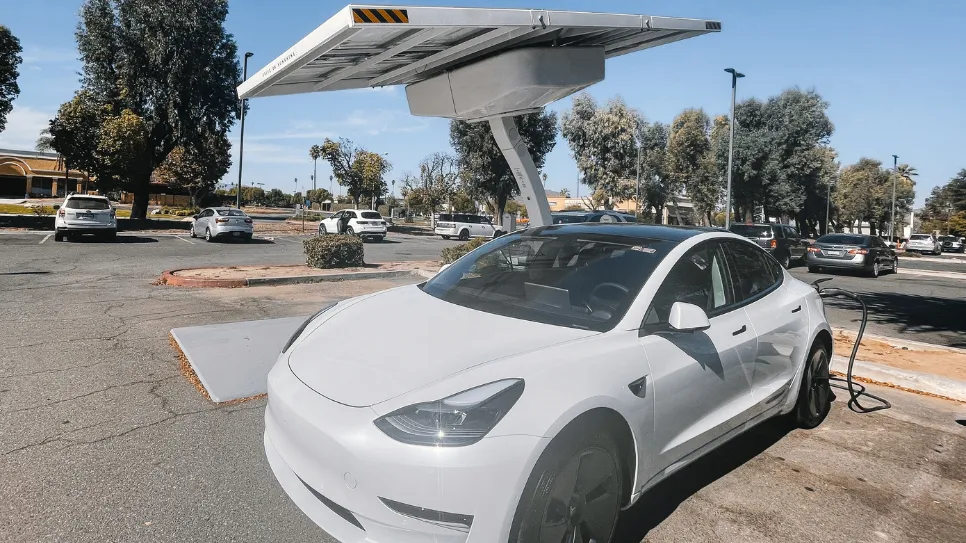
A solar power system is a long-term asset. It is prudent to size the system not just for today's needs, but with a view to the future. A household's electricity demand could increase significantly due to factors like charging an Electric Vehicle (EV), adopting heat pumps, or household expansion.
It is far more cost-effective to size key components, particularly the inverter, with this potential future demand in mind. Choosing an inverter with a slightly larger capacity than immediately required provides the headroom to add more solar panels later without needing to replace the core electronics.
5.2 The oversizing question: when does a bigger system make sense?
Oversizing the solar panel array relative to the inverter is a standard, technically sound design practice that maximizes energy harvest. Oversizing the entire system relative to current needs is a strategic decision that should be based on concrete future plans. Dramatically oversizing a system "just in case" can lead to wasted capital.
5.3 The final hurdle: registering your system (SSEG) and ensuring compliance
This is a critical and non-negotiable final step. All solar power systems connected to the electrical grid must be legally registered with the relevant electricity distributor (either the local municipality or Eskom). This registration process is known as Small-Scale Embedded Generation (SSEG) authorization.
An unregistered solar system is an illegal installation. It poses a significant safety hazard, may void homeowner's insurance, and can result in fines.
The requirement is primarily for safety. During a power outage, utility workers must be certain that no private solar systems are feeding electricity back into the grid. An unregistered system is an illegal installation, posing a significant safety hazard and potentially voiding homeowner's insurance.

Taking control of your energy future
The process of sizing a residential solar power system in South Africa is a comprehensive undertaking that extends far beyond simple calculations. It is a multi-faceted exercise in balancing a household's unique energy consumption against the imperatives of load shedding resilience, and optimizing this solution within a complex financial and regulatory environment.
The journey begins with a thorough analysis of past energy usage, translating figures from an electricity bill into a concrete daily energy target. This target then informs the size of the solar array, a calculation tempered by the realities of South Africa's sunshine, roof orientation, and system inefficiencies.
Crucially, the South African context demands a dual design focus. The system must not only be sized to save costs but also engineered for resilience, requiring a separate audit of essential loads to determine the necessary power of the inverter and the capacity of the battery.
Finally, the technical design must be validated against a financial and regulatory framework in constant flux. The escalating cost of Eskom power, coupled with new tariff structures, strengthens the financial argument for self-generation. However, the ability to sell surplus power remains dependent on local municipalities.
By systematically following the steps outlined in this guide, homeowners can demystify the process. Armed with this knowledge, they are empowered to engage with installers not as passive customers, but as informed partners. This allows for a confident, data-driven decision that leads to a correctly sized system, one that meets their needs, aligns with their budget, and ultimately allows them to take meaningful control of their energy future.